Apply for BirdLife Shoalhaven’s 2024 Student Research Grant
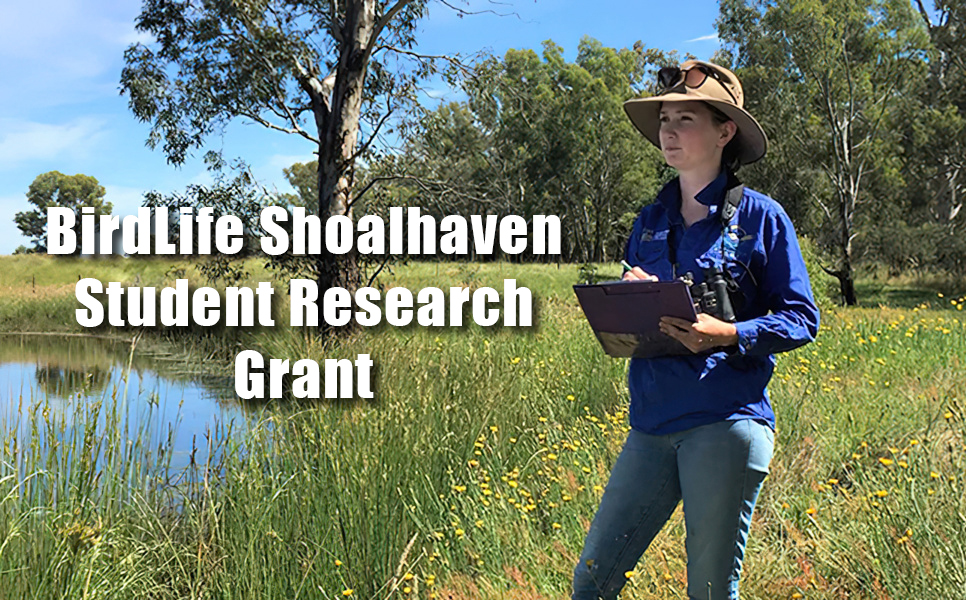  Last year BLS provided a grant to Shanaz Masani, a PhD student at the University of Sydney for her project “Understanding predator hunting to decrease nest predation of ground nesting shorebirds.”
For a full overview of her project go to BLS Autumn 2023 Magazine.
BirdLife Shoalhaven will now provide a second grant of up to $4,000 (plus GST) to fund a research project in 2024. The project must improve bird conservation and a better understanding of birds in the Shoalhaven on the NSW South Coast.
To be eligible you must be a student currently enrolled in an Australian university higher degree course.
While it is not a requirement, projects focused on threatened species or with field work carried out within the Shoalhaven, will be highly regarded.
The grant must be used to directly support the project, e.g. on-ground work, education programs, project equipment or travel to relevant conferences.
The deadline for applications is 31st March 2024.
The application guidelines and form can be downloaded by clicking the following links -
BLS Student Research Grant Guidelines for Applicants
BLS Student Research Grant Application Form
If you have any queries, please contact Rob Dunn at president@birdlifeshoalhaven.org.
|